Case Study: How a Global Luxury Retailer Fought Back Against Bot Chaos

A case study on fighting bots in retail: how one luxury retailer regained control.
Retailers lost over $48bn to online fraud in 2023. But when you factor in refund fraud and post-purchase scams, the true cost to retail could exceed $101bn. And one of the most dangerous drivers behind this rise? Automated bots.
From scalping to credential stuffing, bot attacks are now so frequent and sophisticated that they accounted for 57% of all ecommerce traffic during peak season last year. The arms race between attackers and defenders is only accelerating and traditional protections are failing to keep up.
Inside the Case Study: What happened
This report explores how a luxury footwear retailer was overwhelmed by bot traffic, especially during hype drops of limited-edition products, and how Netacea helped them transform platform performance and customer experience by deploying intent-driven bot protection.
–75.2% of their web traffic was from malicious bots
-Their existing controls missed 91.2% of bot attacks
-Netacea’s platform blocked 11x more bots than their previous solution
By implementing Netacea, the retailer reduced total web requests by 73% and cut CPU usage by 10%—all without adding customer friction or disrupting sales.
What’s Inside: Research Findings
- The real-world cost of bots on infrastructure, brand experience, and customer retention
- A behind-the-scenes look at how scraping, carding, and scalping bots targeted this brand
- The techniques Netacea used to stop bots invisibly using behavioral analytics and machine learning
- How a simple plugin deployment led to major performance gains—without tipping off attackers
- Lessons for any retailer looking to balance frictionless CX with high-level fraud prevention
Why Download This Case Study?
If you’re in retail, the threat isn’t coming it’s already here.
This case study shows how one global luxury retailer exposed the true scale of automated bot traffic on their site over 75% of total web traffic and took decisive action with Netacea to regain control.
You’ll learn:
- How behavioral AI uncovered attacks their existing tools missed
- What changes stabilized the site during limited-edition launches
- The real-world impact: 73% fewer web requests, 10% lower CPU usage, and zero disruption to CX
Whether you’re leading cybersecurity, fraud prevention, or digital infrastructure, this is essential reading to stay ahead of the next attack.
Download the Case Study to see how modern bot protection actually works.
Block Bots Effortlessly with Netacea
Related Research & Reports
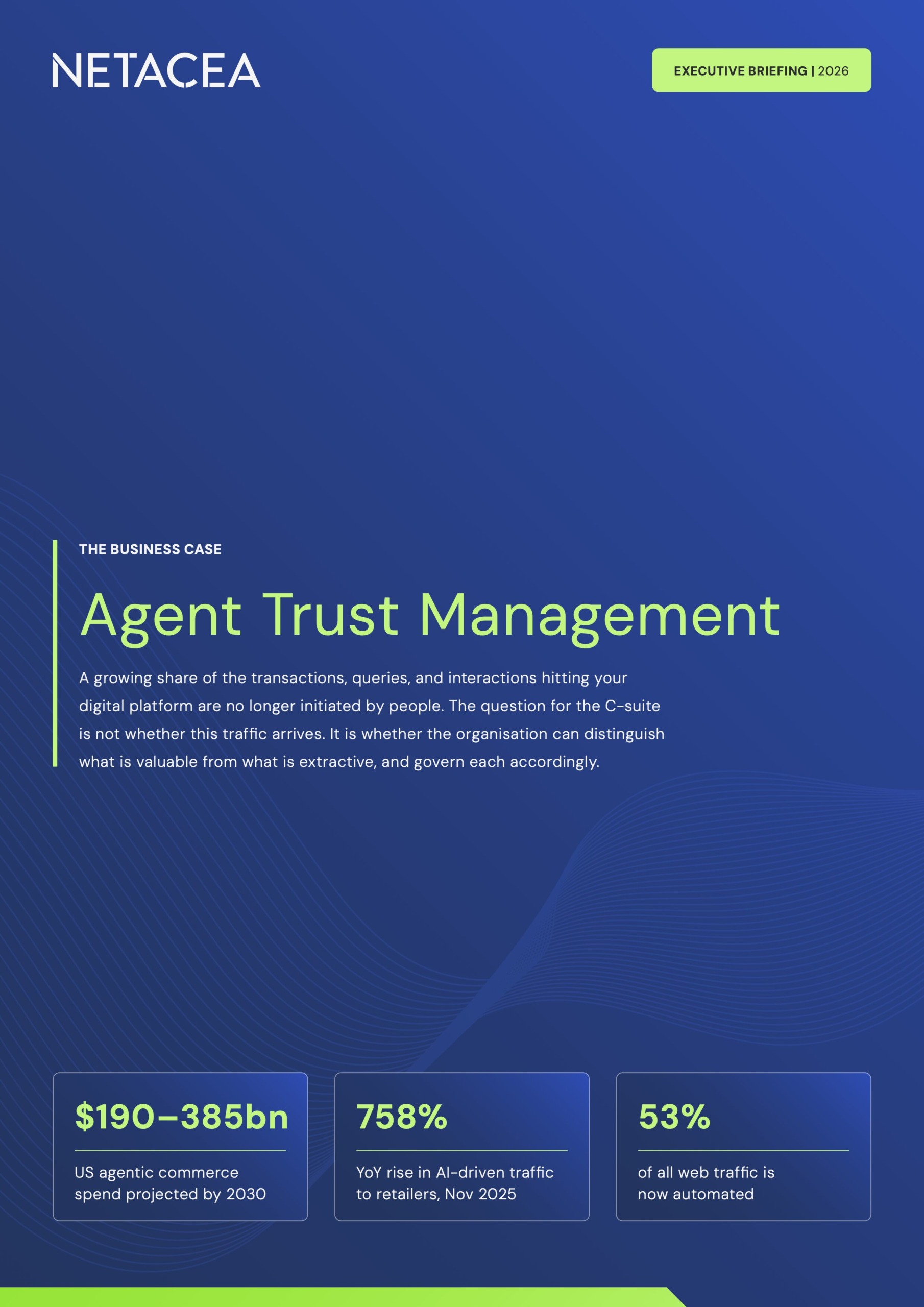
Agent Trust Management: The Business Case

The Governance Gap – Why Your Platform Policies Were Not Written for AI Agents
