Cyber Security in the Age of Offensive AI
Arming your business with a proactive approach to offensive AI
As open artificial intelligence (AI) tools become more accessible, the barrier to entry to cyber-attacks has lowered, making it crucial that businesses recognize how the technology can be harnessed for both offensive and defensive means.
Our research reveals that 93% of respondents believe they will face daily AI attacks within the next six months, and yet adoption of AI technology is not universal across the security stack. Defenses are weighted in favor of protection against high impact attacks such as ransomware and DDoS, rather than bot attacks.
The findings highlight several challenges faced by security leaders:
- Small businesses lack the funds and resources to implement AI within their security stack, vs. 100% of enterprises who have incorporated AI to some degree
- There is pressure to address high-impact attacks such as ransomware and DDoS, over consistent threats such as bot attacks, with only 33% utilizing AI in this area
- 46% of enterprises believe that their APIs are their most secure attack vector, but this is a fallacy
We wanted to determine if enterprises understand the offensive AI threat and what steps they are taking to defend their organization.
Read Netacea’s report for analysis into the greatest challenges and pressures faced by CISOs and security leaders as they seek to incorporate defensive AI, with insights into the future of AI attacks from cyber-threat experts.
Block Bots Effortlessly with Netacea
Related Research & Reports
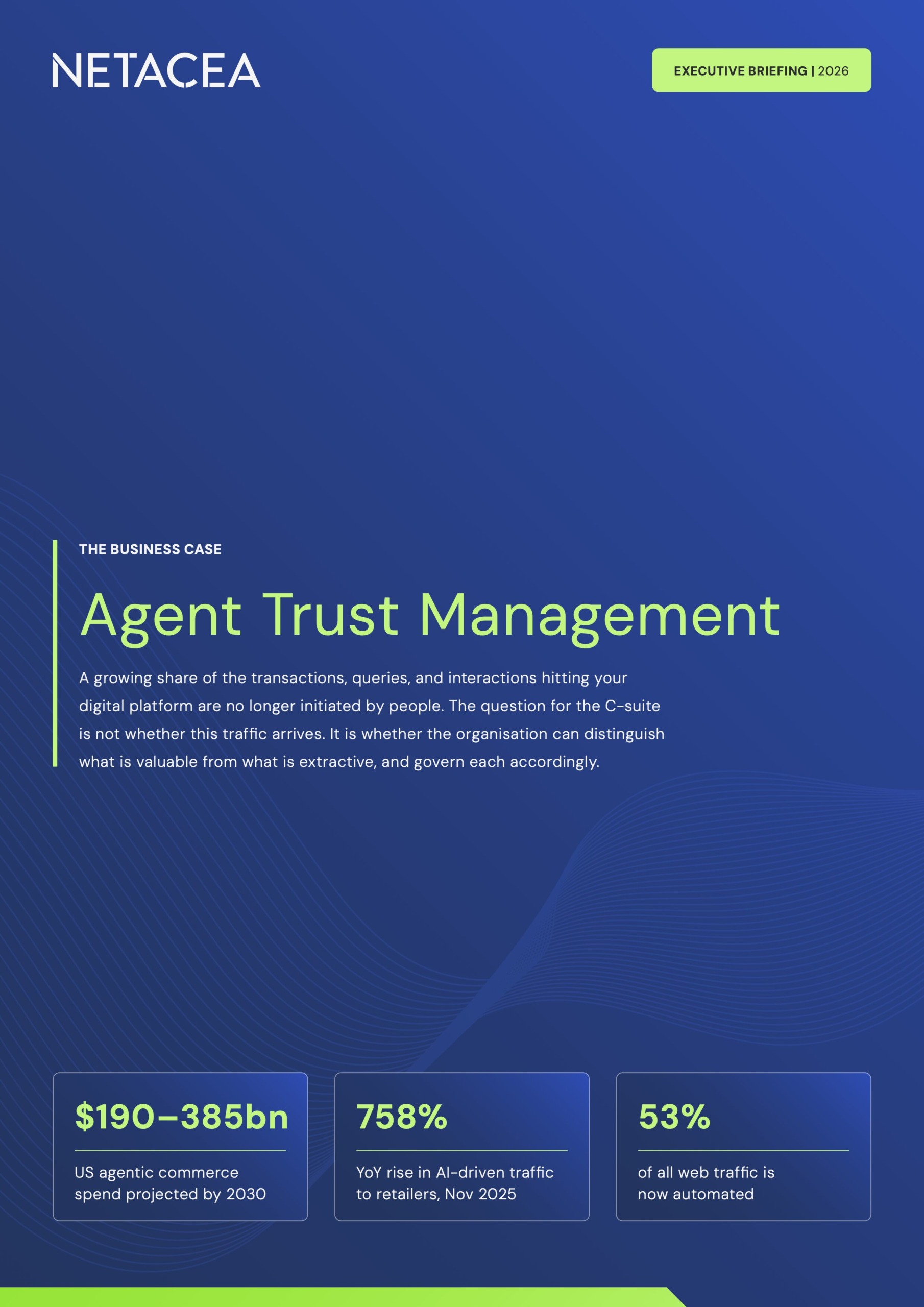
Agent Trust Management: The Business Case

The Governance Gap – Why Your Platform Policies Were Not Written for AI Agents
